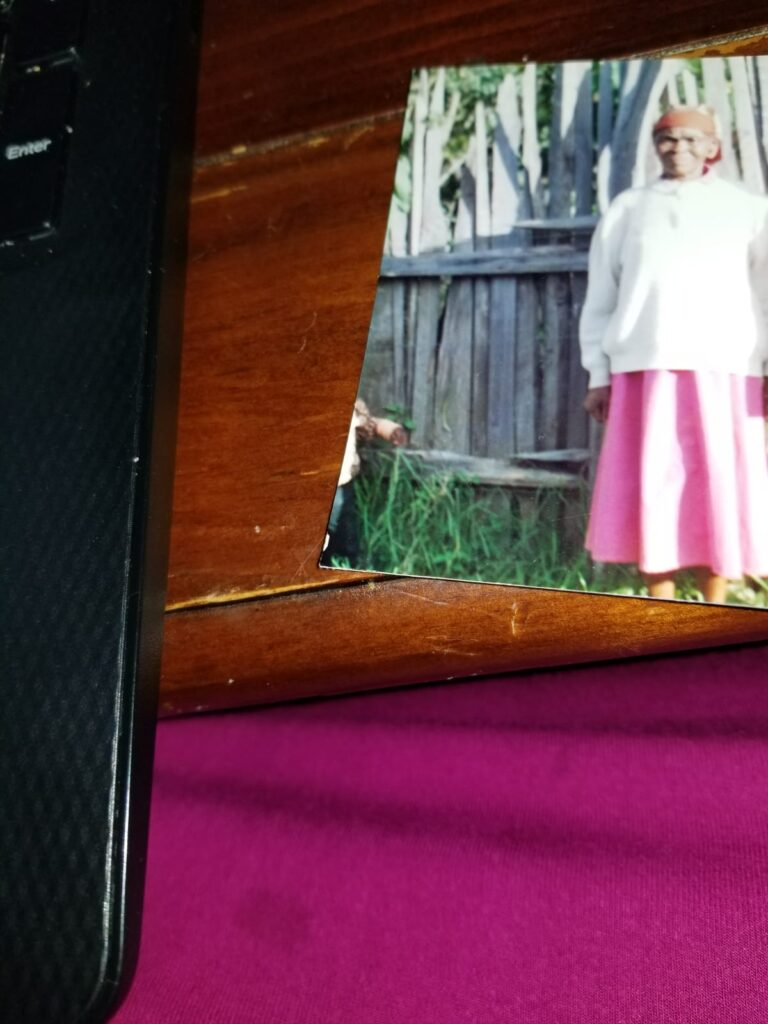
My mother lived for one hundred-seven years (107 years) old and died in August 2018. She was my strength. I felt like I had lost the source of my strength, the one person who kept me going. I had observed my mother’s strength, which was more evident when my father, her only daughter, and her last born son passed away. The support she gave me when I lost my daughter, granddaughter and my wife was unparalleled. When my mother died, I prayed to God to put an end to any more deaths in our family since I thought I had no one to offer me support now that my mother was also gone.
According to the Gīkũyũ naming system, the younger generations keep the family growing as they take the names of the older generation. I am named after my maternal grandfather, Njiraini, the father of my mother, and as the second son I spent a great deal of time with my mother when I was growing up. I would carry the baby girl, my only sister, when my mother went to sell her produce in the market in Karatina and Kagumo, having traveled from Nanyuki. I enjoyed her company, and she usually bought me matumumbuya, thigonji (sconce), Elliott bread, mūtura (traditional boerewors) and thubu wa ngombe (beef bone soup) even though I often cried whenever my feet began hurting because of walking long distances. However, I never saw my mother get tired from walking carrying a heavy load.
My mother was the second born and second daughter in her family. I interacted with my maternal grandmother, but my grandfather had already passed on. As a teenager, I helped my grandmother and uncle in the farm. My grandmother had a chubby figure and light skin complexion. We lived on ripe bananas, mukimo, and cold wimbi porridge. My uncle was a hard worker, and despite how hard I worked to surpass him, it was all in vain. The good thing was that I was always motivated to work hard. My mother was a dynamic mother and a fast walker, and she did manage to keep working in the garden until a few months before her death. She was admitted in Tumutumu Hospital for a month, before she was discharged, but was readmitted in Nanyuki hospital for one week where she died.
My mother managed the farm and took care of our family while my father worked in Nairobi, and when he went to fight in WWII, my mother was left taking care of their only son at the time. She waited until my father came home from the war, and they picked up their relationship from where they had paused. When the war of independence of Kenya began and my father was detained, my mother was left to care for the four kids alone, and despite this, I never saw her sad or lacking the energy to work and make sure we were taken care of. My mother was industrious – in the farm, market, and at home – all while my father worked in Aga Khan Hospital, Nairobi, as a janitor.
My mother used creative ways to raise us, especially me and my older brother. The ten year age gap between us meant that he always acted like the parent, and frequently ordered me around. When I would defy him, he would whip me and I would cry until my mother came home and defended me. When she found me crying one day, she asked whether some parts of my body had been cut off to warrant the endless tears. She told me that I was a man and that I needed to fight my brother to prove I was a man too instead of crying. I did not understand this discipline approach, but it did create a sense of mutual respect between me and my brother. She would give us sticks and tell us to fight each other while she watched. She would call us “my brave men,” spurring us to fight harder. I would try my best to beat my brother, but he would beat me up even harder causing me to cry more. My mother would then ask us to stop, and then call me over. She would beat me and tell me to follow my brother’s orders, then beat my brother and tell him he had no authority to beat me. She would then issue a stern warning against fighting each other as long as we were under her authority. She re-iterated that we were her brave men, but that we were not supposed to fight each other.
We learnt to respect each other and we became closer. I respect my brother up to this day, and he respects me. When I first got married, I took my wife to my brother’s house in Nairobi to introduce them, and when I remarried, I introduced him to my wife once again. On both occasions, he treated us with great respect and love.
My mother taught us to respect our father, and when we got older, she cautioned us against meddling in her and our father’s affairs, especially if they were fighting. She explained that we had no idea how their life journey began or what they had said to each other. When the conversation ended, she asked each one of us to answer whether we had understood her, demanding that we all say “yes.” We never witnessed our father mistreating her in all their lives together.
My brothers and I gave my mother many grandkids, and she had immeasurable love for her son-in-law and daughters-in-law. She always chose her words carefully when talking to us, and she was never fingered as the cause of any conflict or tension among her kids, grandkids, or great grandkids. She was present during the family gathering when my father died, and she remained a widow for about twenty-two years. None of us ever had anything negative to say about her.
My mother lived in the house next to her last-born son, following Gīyũyũ traditions. The youngest son has a young and strong wife as well as young kids to keep his aging parents entertained, and to give them an audience for their stories. The young wife is also considered strong enough to care for the aging parents. Traditionally, any land and property the parents owned was passed on to the last son when they died as a token of gratitude for taking care of them.
My mother was very generous to everyone around her. I remember when I visited my mother she would force me to carry farm produce to take to my family in Nakuru. It was hard for me to convince her that I wouldn’t be able to. She wouldn’t give up, so I finally had to concede and she would choose the two biggest roosters to take to her grandkids. She kept nothing to herself, especially after my sister died following a car accident. The hospital bill was monumental, and my mother gave the hospital her title deed as collateral for our sister’s bill so that her body would be released for burial. She asked her five sons to share the land and get a title deed for our individual pieces of land, and leave her a piece of land also. She made sure we lived peacefully with each other, and loved to present during the annual family reunions set up by her sons so that we could all get to know each other. She always attended the reunions and enjoyed spending time with her family. She made numerous visits to my home in Nakuru, and even visited my grandkids’ homes in times of joy and sorrow.
My mother put her faith in God when we were growing up, and she chose the name Jane when she got baptized. My mother did not know how to read or write, but I remember her asking someone to write a letter on her behalf to pass a message to her husband in Nairobi for a co-neighbor to deliver to my father. My father did read and they shared a small white Gospel of John book. The Bible was not available then, so we didn’t own a full Bible. I saw my mother accompany my father to Thaita Anglican Church, and those days she wore tennis shoes, while on other days she walked and farmed without shoes.
By the time my father retired and they had relocated to Georgia farm in Nanyuki, my mother did not complain about my father’s retirement or that he made his recreational beer in a small container to share with his adult sons whenever they visited. My mother found it normal that her husband wanted to spend time with his grown sons celebrating, as it was his way of trying to reclaim the time he was away from the family because of his job and the wars. I enjoyed the moments spent with my father and my brothers.
I remember when I became a born again Christian and stopped drinking alcohol, my mother defended me from my brothers who had missed my presence during our father’s beer-filled reunions. She asked my brothers to stop teasing me, and reiterated that I had chosen a different way of life.
I remember two weeks before she died, my mother sent me a message in Nakuru asking to see my children. I took some of my kids to see her, and excitedly blessed them by spitting saliva on them – a traditional way of blessing. My grandkids cried when she spit on them since they didn’t know about the tradition.
Her funeral was attended by her children, grandchildren, more than three dozen great-grandchildren, and people of all ages – friends, and relatives she had interacted within her lifetime. She was laid to rest in her garden on Gīthũci farm, formerly George farm, in Nanyuki, Laikipia County in Rift Valley Province. I loved my mother.